India and Pakistan have fought repeatedly since their partition in 1947, often over Kashmir. The 2025 war, which has been aggravated with the April Pahalgam attack killing hundreds of Indian soldiers, is different from earlier skirmishes as traces on the ground of conventional war such as use of advanced military hardware, cyber war and AI-based intelligence.
This blog examined the advanced systems both countries are racing to build — missiles, drones, cyber operations and artificial intelligence — and their strategic effects on a nuclear-armed region.
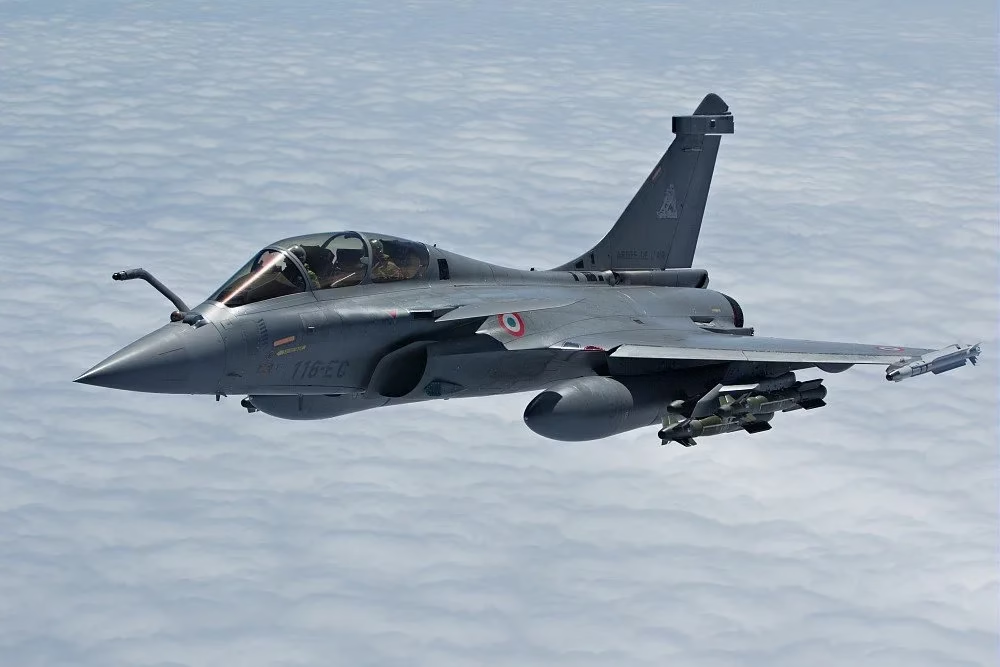
1. Missile Systems: Precision and Power
India’s Missile Arsenal
- Agni-V Ballistic Missile
- Range: 5,000+ km
- Features: MIRV-capable, solid-fuel propulsion, GPS + inertial guidance (CEP < 10 m)
- Role: Strategic deterrence against regional adversaries including China and Pakistan
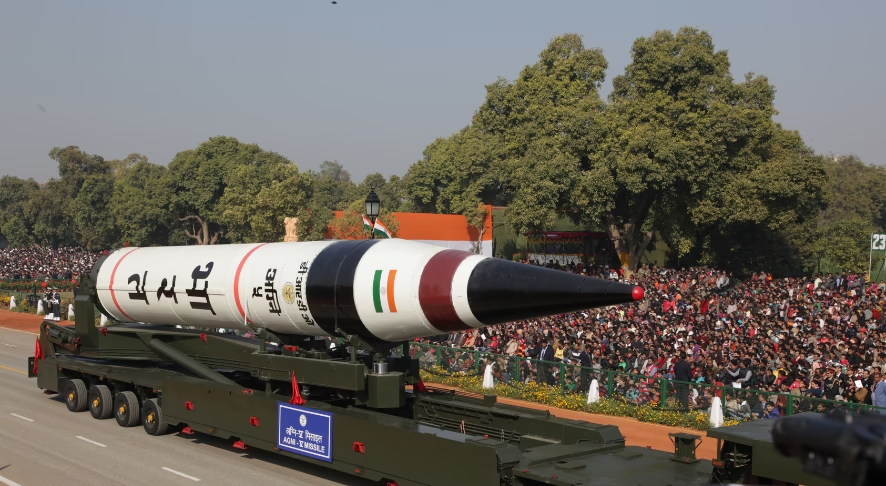
- BrahMos Cruise Missile
- Speed: Mach 2.8
- Range: 290–450 km
- Use Case: Accurate strikes of Operation Sindoor, carried out from Rafale jets
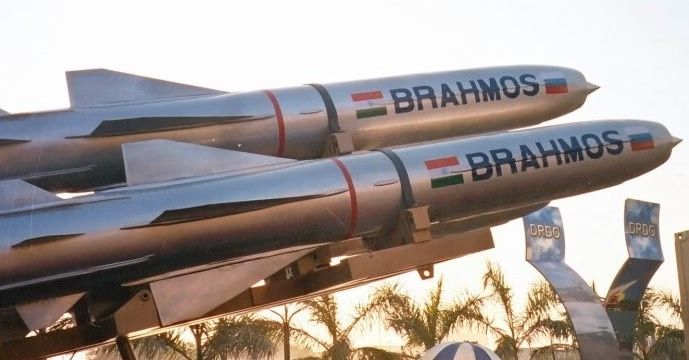
- Scalp Cruise Missile
- Range: 560 km
- Features: Terrain-Guidance-stealth-infrared-homing
- Purpose: Long-range Determination with minimum use of radar.ction
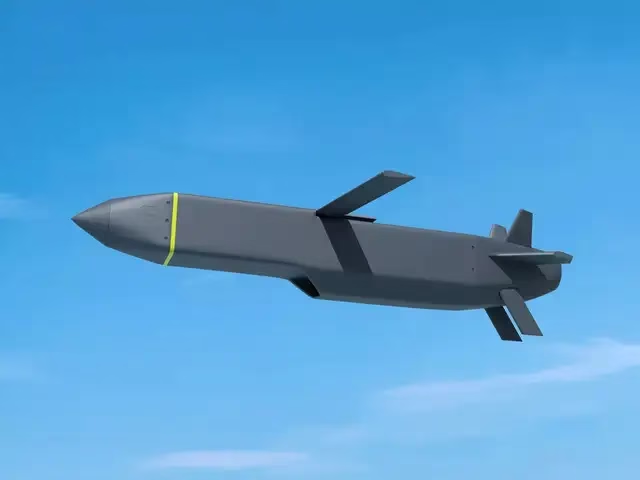
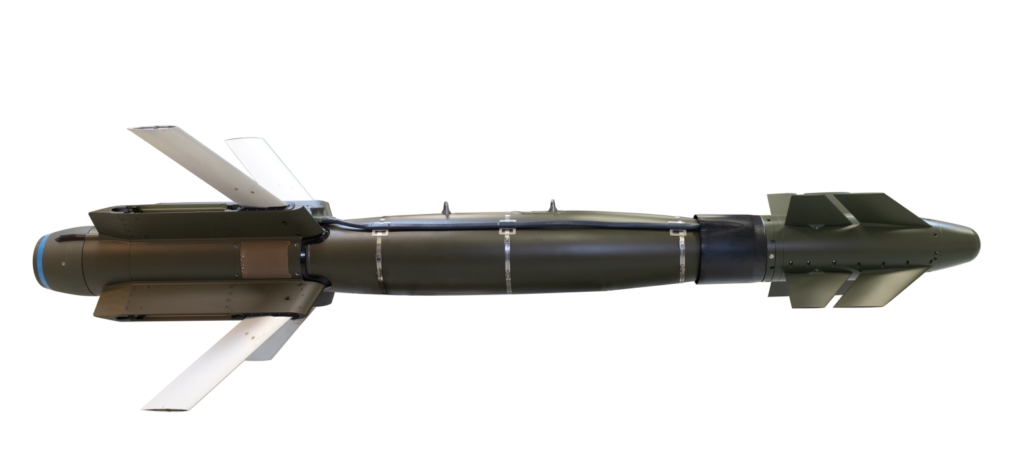
- HAMMER Precision-Guided Munitions
- Range: 70 km
- Feature: Turns dumb bombs into GPS/INS-guided weapons
- Use: Precision strikes with limited civilian casualties
Pakistan’s Missile Capabilities
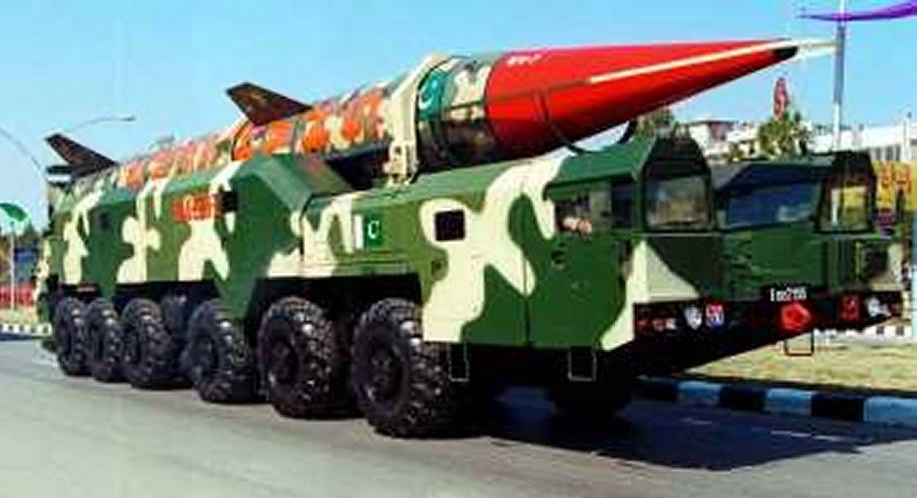
- Shaheen-II Ballistic Missile
- Range: 2,000 km
- Warhead: 700–1,000 kg
- Guidance: Inertial + Beidou navigation
- Role: Strategic counter to India’s traditional edge
- Takbir and Al-Battar Smart Bombs
- Range: Up to 450 km
- Guidance: GPS/INS
- Purpose: Long range precision stroke at stand off distances
- Anti-Radiation Missiles
- Role: Radar and communications systems are targetable, improving electronic warfare capabilities
Strategic Insight
- India: Long-range and MIRV-capable systems reiterate strategic regional and global intentions
- Pakistan: Focus on tactical-range capability for deterrence and defense
2. Air Defense Systems: Shielding the Skies
India’s Air Defense
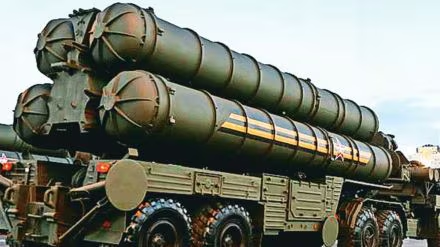
- S-400 ‘Sudarshan Chakra’
- Range: Up to 400 km
- Capabilities: Multiple layers of protection, real-time monitoring more than 100 users
- Operational Use: Drones and Missiles Intercepted in May 2025 Attacks
- High-Frequency Jamming Systems
- Deployment: Along the western border
- Function: Interferes with GNSS (GPS, GLONASS, Beidou) for the purpose of neutralizing precision guided weapons
Pakistan’s Air Defense
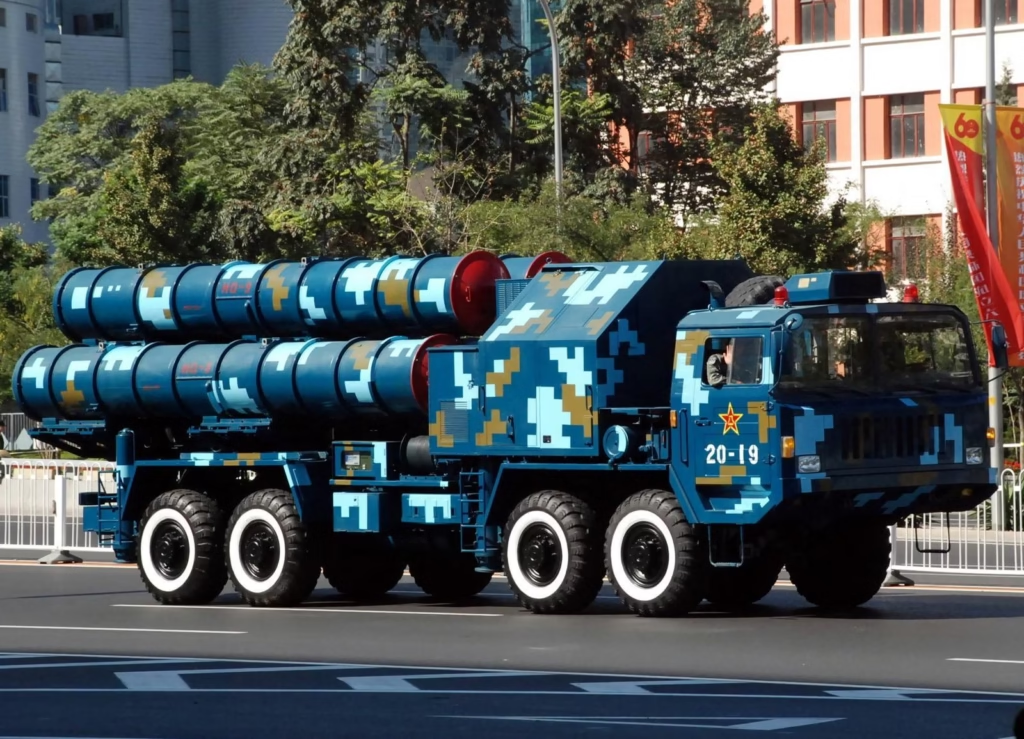
- HQ-9P Surface-to-Air Missile System
- Range: 125 km
- Limitations: Struggled during Indian strikes in Lahore (May 2025)
- Drone Interception Systems
- Technologies: Radar-guided SAMs, electronic jammers (Chinese-origin likely)
- Claim: 29 Indian drones neutralized
Strategic Insight
- India’s S-400s and jamming systems provide better protection, and technological depth
- ‘Pakistan’s HQ-9P susceptible to high-end threats’
3. Drones and Unmanned Systems: The New Frontier
India’s Drone Capabilities
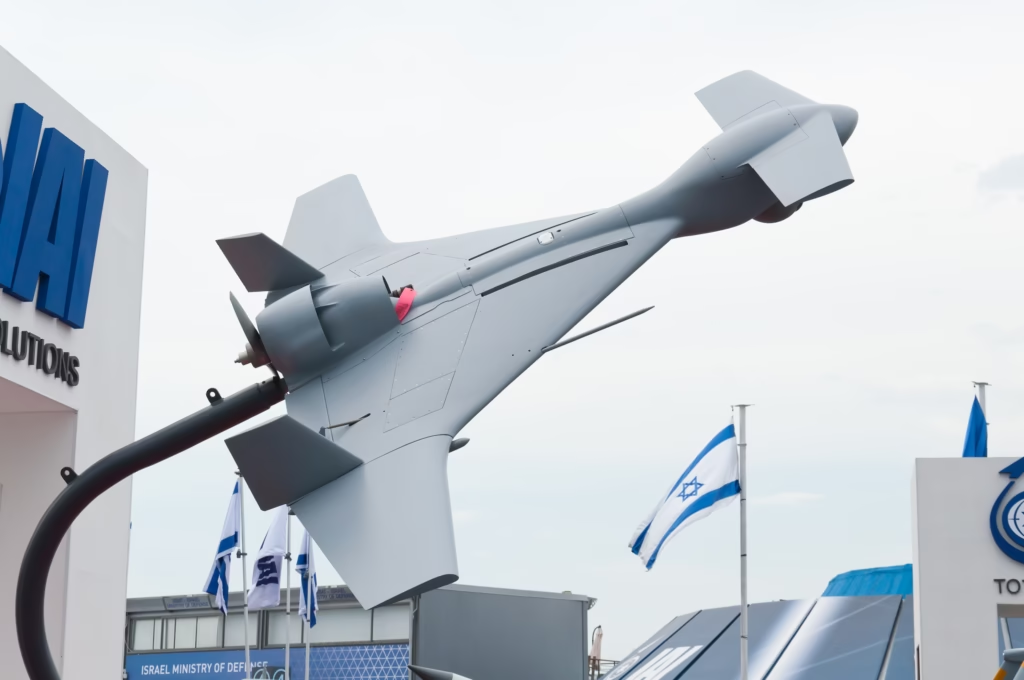
- HAROP Loitering Munitions
- Origin: Israel
- Range: 1,000 km
- Features: Anti-radiation targeting, 23 kg warhead, 6-hour loiter time
- Purpose: Precision strikes on radar systems
- Surveillance Drones
- Operators: NTRO and RAW
- Capabilities: Real-time thermal imaging, SAR (Synthetic Aperture Radar), AI integration
Pakistan’s Drone Operations
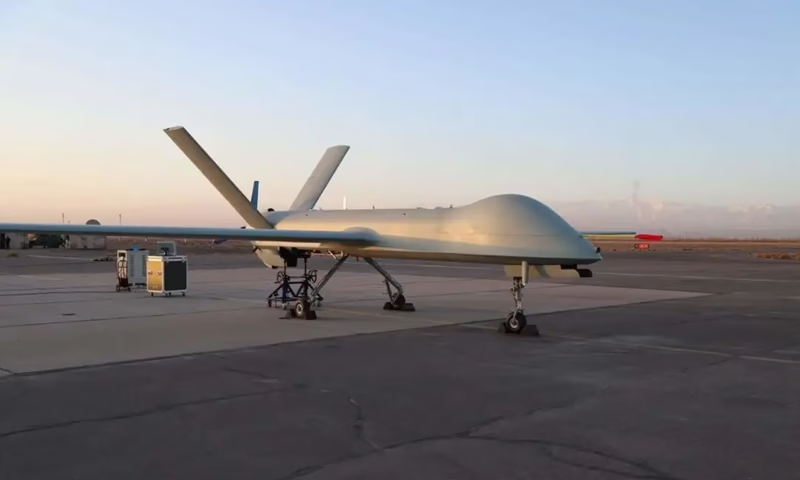
- Armed Drones (e.g., CH-4)
- Origin: China
- Range: 1,500 km
- Use: Coordinated strikes on Indian bases
- Counter-Drone Measures
- Systems: RF jammers, radar-guided interceptors
- Success: Claimed neutralization of Indian drones
Strategic Insight
- India: Deploys drones – precision and advanced EW – for force multiplication
- Pakistan: Wise to quantity and price, driven partly by imports from China
4. Cyber Warfare: The Invisible Battlefield
India’s Cyber Operations
- Agencies: RAW, NTRO
- Tools: Real-time IDS (Intrusion Detection Systems), AI-assisted traffic analysis
- Recent Action: Blocked attacks by “IOK Hacker” group in April 2025
- AI-Driven Intelligence
- Focus: Intercepted comms, social media, satellite imagery
- Output: Predictive targeting and threat mapping
Pakistan’s Cyber Efforts
- IOK Hacker Group
- Tactics: SQL injection, phishing
- Goal: Website defacements, data exfiltration
- Cyber Espionage
- Target: Indian military communications
- Challenges: Low native tools,reliance on third-party techh
Strategic Insight
India’s cyber architecture is more robust, has more AI integration and is more proactive; Pakistan is behind partly due to lesser investment and partly due to capability deficits.India’s cyber framework is more resilient, AI-integrated, and proactive; Pakistan lags due to lower investment and capability gaps.
5. AI and Intelligence: The Brain Behind the Battle
India’s AI Ecosystem
- Integration: AI with satellite (NavIC), drone, and HUMINT inputs
- Use Case: Operation Sindoor displayed the identification and prioritisation of threats as it occurred live.
- NavIC System
- Function: Precision geolocation independent of GPS
- Support: Enhances mission autonomy and resilience
Pakistan’s AI Limitations
- Investment: $1.32 million (2018)
- Dependence: Chinese platforms with minimal domestic R&D
- Strategy: Human intelligence (HUMINT) remains dominant
Strategic Insight
India has operational superiority through its data fusion and AI models. Lack of integration and local R&D drag on Pakistan’s parity
6. Nuclear Capabilities: The Ultimate Deterrent
India’s Nuclear Posture
- Policy: No First Use (NFU)
- Arsenal: Estimated 160 warheads
- Delivery Systems: Agni-V, K-15 SLBMs, Mirage/Rafale aircraft
- Support Systems: Early warning radar, C4I integration
Pakistan’s Nuclear Strategy
- Doctrine: First-Use Policy
- Arsenal: Estimated 170–200 warheads
- Tactical Nukes: Nasr missile (60 km range), designed for battlefield use
Strategic Insight
India follows a posture of strategic restraint and credible, second-strike capability. Pakistan’s first-use doctrine, especially tactical nukes, increases escalation dangers.
Conclusion: Technology and the Path to Stability
The 2025 India-Pakistan war is an example of how modern warfare is as much about code as combat. It is also strategically advantageous for India which outstrips Pakistan in missile systems, air defense, AI, and cyber operations. Pakistan compensates for these imbalances by the use of tactical innovations, nuclear deterrence and support from China.
But the high-tech arms race will heighten the danger of miscalculation, especially under the nuclear shadows. And to maintain order, diplomacy must prevail over escalation. Revivification of talks, sensitization of core issues such as Kashmir, creation of hotlines for contact are possible measures that could prevent disaster in this gradually AI-driven theatre of battle.
Disclaimer: Information provided is based on publicly available sources and user experiences.
if you have any issue with this Article – Click Here